
By Siddhi Parchure,
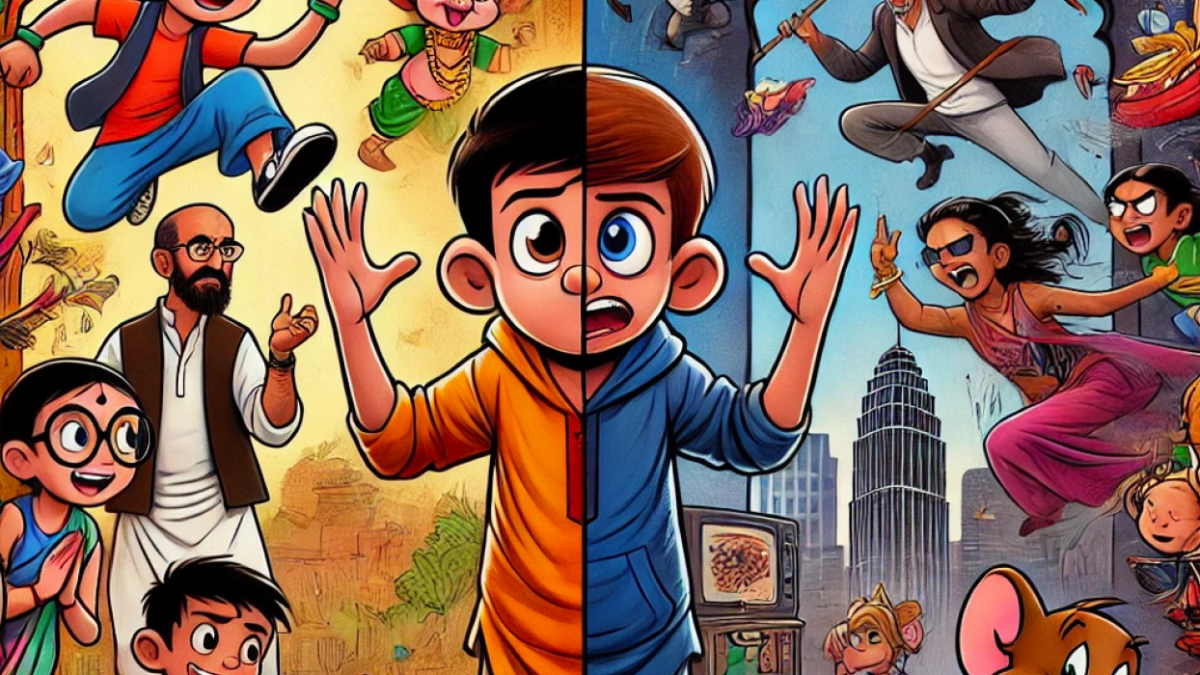
The relationship between cartoons and the development of children’s mindsets is an intriguing area of study that has garnered significant attention over the years. In India, where cartoons are widely consumed by children across all age groups, their influence on behavior, cognitive development, and social skills has become a subject of substantial research. The role that cartoons play in shaping young minds is complex and multifaceted, given that they can have both positive and negative effects depending on the content and themes portrayed. With the increase in accessibility to various forms of visual media, Indian children are exposed to both local and international cartoons, each having a profound impact on their mental development. Cartoons have, over time, emerged as both a source of entertainment and education, fostering creativity while also presenting challenges in areas such as aggression and distorted reality perceptions. Understanding this dual impact is crucial for parents, educators, and society at large to ensure that the young generation is benefiting positively from their interaction with such media.
Creativity and Cognitive Development Through Cartoons
Cartoons are often a treasure trove of creativity, encouraging imaginative thinking in children. The animated format, with its vibrant colors, exaggerated movements, and fantastical elements, stimulates a child’s imagination. In India, shows like Mighty Little Bheem and Chhota Bheem are known for their engaging storylines that encourage problem-solving and logical thinking. Children begin to develop creative ideas, often drawing parallels between the cartoon world and their surroundings.
This ability to imagine alternate possibilities is essential in early childhood as it fosters creative thinking, which they apply in various scenarios during play, schoolwork, or even in developing relationships with peers.
In addition to fueling creativity, cartoons also play a significant role in cognitive development. Educational cartoons designed to teach basic arithmetic, language, or scientific principles do so in a way that is engaging for children. For example, Dora

the Explorer, an internationally popular cartoon, teaches children to think critically and solve problems while navigating an adventure. Children exposed to such programs tend to show improved cognitive flexibility and enhanced memory skills. The repetition of patterns, numbers, or facts embedded within storylines helps reinforce learning in a way that is both fun and educational.
Language Development and Exposure to Diverse Cultures
Cartoons introduce children to a variety of vocabulary, idioms, and expressions, enriching their language development. Exposure to well-crafted dialogues and scenarios in cartoons helps children pick up new words and language structures early on. This is particularly important in a multilingual country like India, where cartoons are often dubbed in local languages, allowing children to develop strong linguistic foundations in their native tongue while simultaneously picking up elements of other languages, such as Hindi or English.
Popular international cartoons like Doraemon and Shinchan have been localized, introducing children to a mix of global and Indian entertainment styles. While the language may be modified to suit the local audience, these cartoons often introduce concepts and social norms that are foreign to Indian culture. This cross-cultural exposure allows children to broaden their understanding of the world, develop empathy for diverse perspectives, and become more adaptable to different cultural contexts. However, the influence of such cartoons is not always positive, and in some cases, they may promote behaviors or values that clash with traditional Indian beliefs.
Cartoons as a Medium for Teaching Social Skills
Socialization is an integral part of a child’s growth, and cartoons can be instrumental in teaching vital social skills. Many popular cartoons emphasize friendships, collaboration, and the importance of understanding emotions. Children who watch shows like Chhota Bheem or Motu Patlu, which depict strong bonds between characters, learn the values of teamwork and cooperation. These programs showcase scenarios where characters resolve conflicts through dialogue, compromise, or empathy, rather than aggression, helping young viewers understand the significance of positive social interactions.
In addition to promoting social cooperation, cartoons also help children develop emotional intelligence. Through characters that express a wide range of emotions, children learn to identify and name feelings like happiness, anger, sadness, or frustration. For instance, animated shows often feature episodes where a character experiences loss or disappointment, followed by a resolution that teaches children to cope with their own emotions constructively. These moments of emotional learning are essential for building empathy, as they encourage children to put themselves in others’ shoes and respond with kindness in similar real-life situations.
The Dark Side: Aggression and Negative Behavioral Changes
While cartoons can nurture positive traits, the negative impact of cartoons on children’s behavior cannot be ignored. Research has shown that exposure to violent or aggressive content in cartoons can have adverse effects on children’s behavior.
For example, slapstick cartoons like Tom and Jerry, while humorous to many, can inadvertently encourage aggressive tendencies by glorifying physical confrontations without showing the consequences. Children who regularly consume such content may begin to imitate these aggressive behaviors, both in play and in their interactions with peers.
A significant percentage of children exposed to aggressive cartoon characters demonstrate behavioral changes, including an increased tendency to resolve conflicts through physical means. This is particularly concerning in cases where children fail to differentiate between playful aggression in cartoons and real-life actions. Studies have found that children who watch violent or aggressive cartoons may exhibit higher levels of defiance, disrespect towards authority, and general impulsivity, making it difficult for them to regulate their emotions and behaviors in social settings.
The Distorted Perception of Reality
One of the major concerns associated with excessive cartoon viewing is the distortion of reality. Cartoons, by their very nature, are exaggerated, often showcasing characters that perform impossible stunts, survive dangerous situations without harm, or manipulate time and space. Younger children, who are still developing their understanding of the world, may struggle to distinguish between fiction and reality, leading to misunderstandings about the consequences of certain actions. For example, children may attempt to mimic their favorite characters by
jumping from heights, running into traffic, or engaging in risky behavior, under the assumption that they too will escape unscathed as the characters do in cartoons.
This blurred line between reality and fantasy can pose a risk to children’s safety and can impair their ability to judge real-world situations. Parents and educators must take an active role in explaining the difference between fictional scenarios and real- life consequences, ensuring that children do not internalize the harmful aspects of animated media.
Cultural Context in India: Navigating Global and Local Influences
The cultural context of India adds a unique dimension to the conversation about cartoons and their influence on children. Indian children are avid consumers of both locally produced cartoons and international content. Popular Indian shows like Chhota Bheem, Little Singham, and Roll No. 21 blend Indian cultural elements with universal themes, making them relatable for Indian audiences. These shows often incorporate traditional Indian values, languages, and moral lessons, helping children connect with their heritage while enjoying the entertainment. In these cases, cartoons serve as valuable tools for teaching cultural norms and traditions, such as respect for elders, the importance of community, and acts of kindness.
However, the influx of international cartoons, particularly those that feature characters and scenarios that are far removed from Indian society, can create confusion or even conflict with local values. For example, shows like Shinchan and Doraemon, which portray children engaging in mischievous or defiant behavior, may influence Indian children to challenge authority figures or imitate behaviors that are not culturally appropriate. This highlights the importance of context when assessing the impact of cartoons on children’s development.
Parental Guidance and Educator Involvement
Given the dual impact that cartoons can have on Indian youth, it is essential for parents and educators to play an active role in managing children’s consumption of animated content. Rather than simply limiting screen time, parents can take steps to guide children towards shows that offer educational value and promote positive social behaviors. Encouraging children to watch age-appropriate content and engaging with them during or after watching cartoons can help reinforce the lessons learned from the shows while discouraging negative behaviors.
Educators, too, can incorporate selected cartoons into their teaching methods, using them as supplementary tools to enhance learning in the classroom. By selecting cartoons that align with educational goals, teachers can capture children’s attention while fostering their intellectual and emotional development.
Conclusion
The impact of cartoons on children’s mindsets is both complex and multifaceted, serving as a powerful tool for both positive and negative influences. On the one hand,
cartoons foster creativity, cognitive growth, and social skills, offering children an engaging way to learn about the world. On the other hand, exposure to inappropriate or aggressive content can lead to behavioral issues, aggression, and a distorted understanding of reality. In a culturally diverse country like India, the influence of cartoons is further complicated by the blending of global and local content. Therefore, it becomes essential for parents, educators, and society to guide children’s media consumption, ensuring that they benefit from the educational and creative aspects of cartoons while mitigating their potential harms. A balanced approach that nurtures a healthy and well-rounded mindset is vital for fostering the positive development of Indian youth in this era of digital entertainment.