


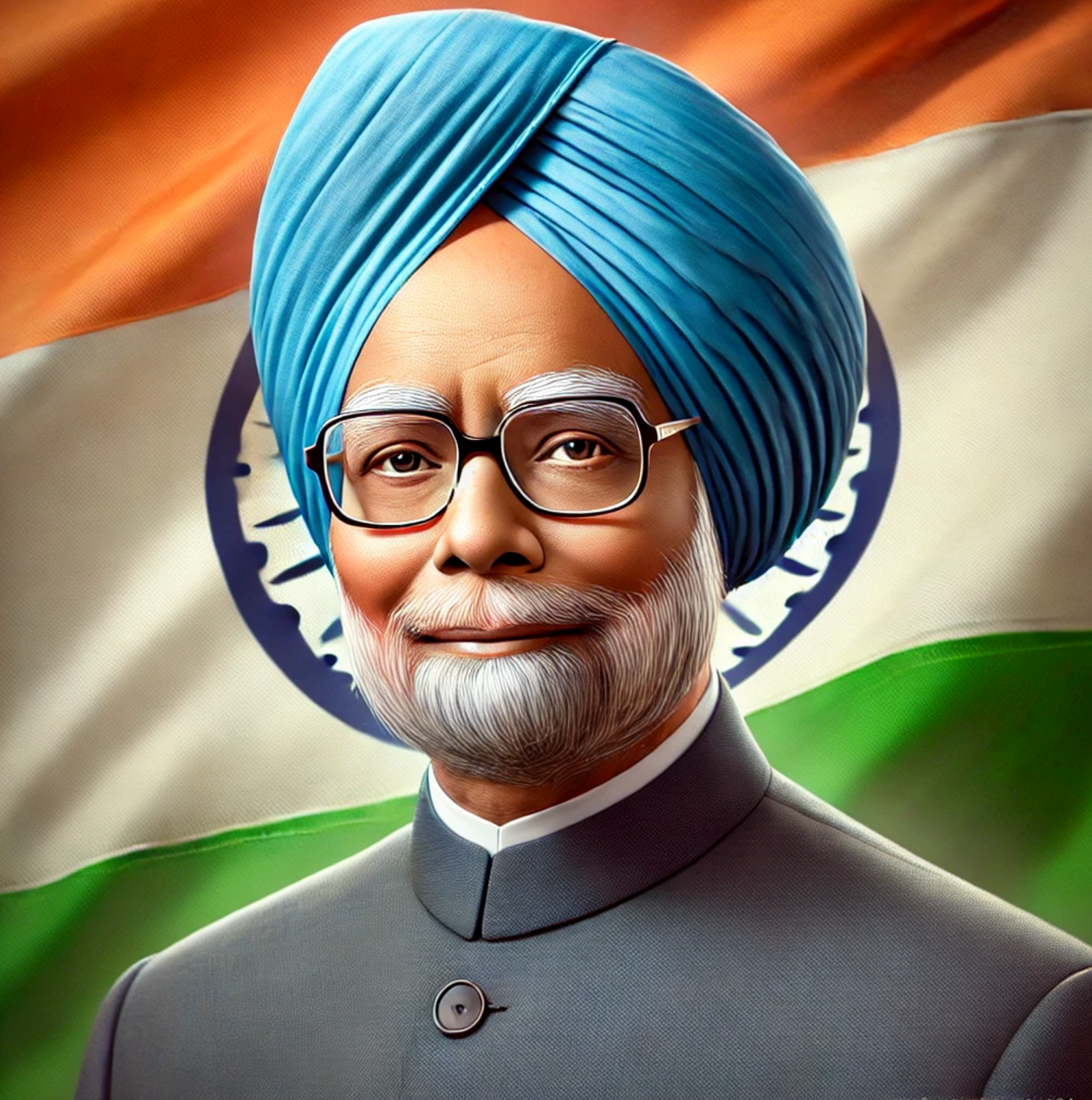
Dr. Manmohan Singh, the 14th Prime Minister of India, is celebrated as one of the nation’s most accomplished economists and a stalwart of public policy. Born on September 26, 1932, in Gah (now in Pakistan), his journey from a humble village to the corridors of power is a testament to his brilliance, perseverance, and commitment to India’s progress.
Early Life and Education
Dr. Singh was raised in an environment where education was valued deeply. After the Partition of India, his family moved to Amritsar, Punjab. His academic excellence shone early; he completed his undergraduate studies at Punjab University and pursued further education at Cambridge University, earning a first-class honors degree in Economics. Later, he earned a DPhil in Economics from Oxford University, specializing in international trade and development economics.
Career as an Economist
Dr. Singh’s illustrious career as an economist began at institutions like the United Nations Conference on Trade and Development (UNCTAD) and the International Monetary Fund (IMF). He also served as the Governor of the Reserve Bank of India and later became the Deputy Chairman of the Planning Commission.
However, his most transformative role came as the Finance Minister of India (1991-1996) under Prime Minister P.V. Narasimha Rao. This period marked the inception of India’s economic liberalization, a landmark reform process that reshaped the nation’s economic landscape. Facing a severe balance-of-payments crisis, Dr. Singh introduced policies that opened up the Indian economy to foreign investments, reduced trade barriers, and fostered private enterprise. His famous budget speech of 1991 declared, “No power on Earth can stop an idea whose time has come,” reflecting his belief in India’s potential.
Prime Ministerial Tenure (2004–2014)
Dr. Singh became the Prime Minister of India in 2004, leading the United Progressive Alliance (UPA) government. His tenure as PM, marked by economic growth and social welfare initiatives, cemented his legacy as a leader who bridged India’s traditional values with modern aspirations.
Key Achievements During His Premiership
1.Economic Growth: India experienced unprecedented GDP growth during his tenure, becoming one of the world’s fastest-growing economies.
2.Social Welfare Programs: Dr. Singh championed flagship schemes like the Mahatma Gandhi National Rural Employment Guarantee Act (MGNREGA), Right to Information Act, and the National Rural Health Mission.
3.Nuclear Agreement: The India-U.S. Civil Nuclear Agreement of 2008 marked a significant milestone in India’s foreign relations, ending decades of nuclear isolation.
4.Infrastructure Development: His administration prioritized infrastructure through initiatives like the Golden Quadrilateral and accelerated power and telecom sector reforms.
5.Focus on Education and Health: The Right to Education Act was passed during his tenure, ensuring free and compulsory education for children aged 6-14.
Challenges and Criticism
While Dr. Singh’s tenure was marked by achievements, it was not without criticism. Allegations of corruption and policy paralysis during his second term (2009-2014) overshadowed some of his government’s accomplishments. Despite this, his personal integrity and humility remained unchallenged.
A Legacy of Humility and Vision
Dr. Manmohan Singh’s life and career reflect a deep commitment to India’s progress and prosperity. A scholar, reformer, and leader, his contributions to India’s economic and social fabric are unparalleled. He remains a symbol of how intellect and ethics can shape governance in a complex democracy.
Even after stepping down as Prime Minister in 2014, Dr. Singh continues to inspire millions with his wisdom and quiet dignity. His legacy serves as a reminder of the transformative power of knowledge, perseverance, and a vision for a better future.
