


Introduction
In 2024, artificial intelligence (AI) has not only remained a prevalent technology but also surged in influence, affecting sectors from finance and healthcare to entertainment and the job market. AI’s rapid expansion into everyday applications has sparked widespread interest and debate over its benefits, risks, and ethical implications. This article delves into the current AI trends in the USA, exploring how AI is reshaping industries, altering job dynamics, and raising ethical questions as society adapts to this technological evolution.
AI-Driven Innovations Across Sectors
1. Healthcare and Medicine
AI innovations in healthcare are transforming patient care, diagnostics, and personalized medicine. AI tools, particularly those powered by machine learning, enhance diagnostic accuracy, manage patient data, and even predict disease trends. Technologies like digital twins—virtual models that replicate patients’ physiological data—allow practitioners to simulate treatments, increasing success rates and offering more targeted interventions.
Current AI Technologies in Healthcare:
- Predictive analytics in patient care
- AI-powered diagnostic tools in radiology and pathology
- Digital twins in personalized medicine
These tools are driving the healthcare industry towards more preventive, cost-effective, and personalized care solutions, but they also raise concerns about patient data privacy and the ethical use of medical AI.
2. Education and Learning
Education technology (EdTech) has embraced AI to offer personalized learning experiences, improve accessibility, and provide data-driven insights into student performance. Adaptive learning platforms utilize AI algorithms to customize lesson plans based on individual students’ progress and learning styles.
AI-Enabled EdTech Trends:
- AI-driven tutoring and assessment tools
- Virtual classrooms and digital campuses
- Real-time data analysis for tailored learning experiences
While AI is enhancing educational accessibility and efficiency, some educators worry about the possible depersonalization of learning and over-reliance on technology in education.

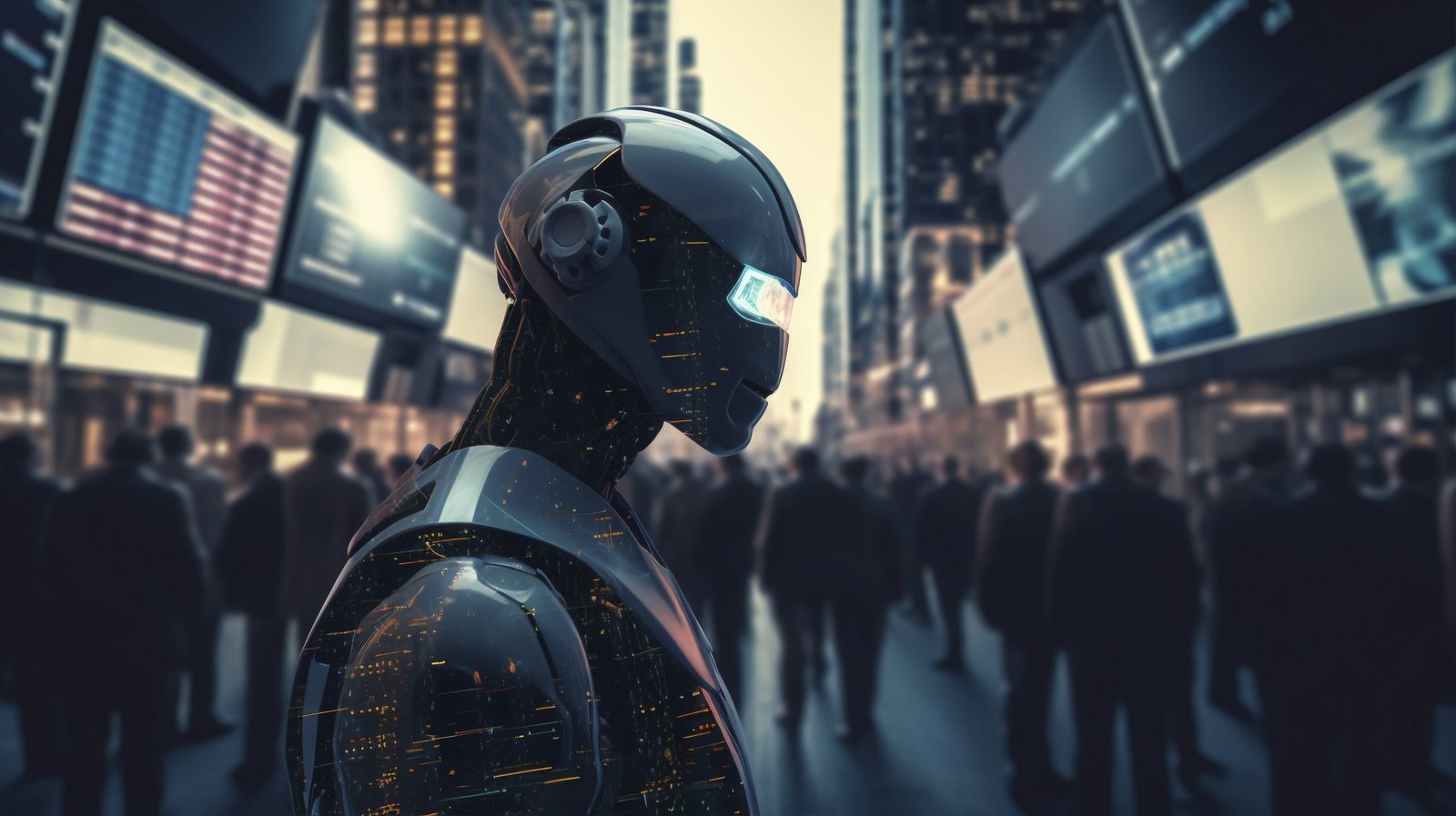
3. Finance and Retail
AI is revolutionizing financial services by enhancing fraud detection, improving customer service, and automating processes. The rise of financial AI has made services more efficient and accessible, especially with virtual assistants that support tasks like customer inquiries, investment insights, and financial planning.
Financial AI Developments:
- AI in fraud prevention and detection
- Personalized financial planning tools
- Predictive analytics for stock market trends
However, AI’s presence in finance brings concerns about algorithmic bias and data privacy, raising ethical and regulatory questions that financial institutions must address.
AI and the Job Market: Automation and New Opportunities
The rapid integration of AI in businesses has significantly altered the American job market, automating routine tasks in fields such as manufacturing, retail, and even creative industries. Although AI has improved efficiency, it has also created tension around job displacement and the future of employment.
1. Automation and Workforce Transformation
Industries like manufacturing and retail have seen job displacement due to AI-powered automation. Machines and robots now perform tasks like assembly, inventory management, and customer service, which were previously labor-intensive. Many workers fear that AI could replace them, pushing policymakers and companies to consider retraining and upskilling programs to prepare the workforce for more AI-integrated roles.
2. The Rise of AI-Centric Jobs
Despite concerns, AI has also generated new job opportunities, particularly in tech sectors. Positions in AI development, machine learning, data analysis, and ethical AI policy-making are in high demand. Educational institutions are increasingly offering specialized programs to equip students for these roles, while companies seek talent skilled in AI operations, ethics, and security.
Emerging Job Roles in AI:
- Data scientists and machine learning engineers
- AI ethicists and policy advisors
- AI system trainers and interpreters
As the job market adapts to the AI boom, there is a growing need for educational institutions to prepare students for these evolving roles, and for companies to foster continuous learning environments.
Ethical and Social Implications of AI
As AI becomes more entrenched in society, ethical and social concerns have risen to the forefront of discussions. From biases in AI algorithms to concerns about privacy and surveillance, society faces new challenges in balancing AI’s benefits with its ethical impacts.
1. Algorithmic Bias and Fairness
AI systems, while powerful, are not immune to bias. Disparities in data used to train AI models can lead to biased outcomes, affecting marginalized groups in sectors like hiring, criminal justice, and lending. Addressing this bias has become a priority for tech companies and policymakers, with calls for more transparent algorithms and diverse data sets.
Current Ethical Challenges in AI:
- Bias in hiring and criminal justice algorithms
- Lack of transparency in AI decision-making
- The need for diverse and representative data
2. Privacy and Surveillance Concerns
AI applications in surveillance and data analysis raise privacy issues, especially as governments and corporations adopt facial recognition and data tracking technologies. Americans are increasingly concerned about how their personal data is being used and stored, calling for stricter data privacy laws to protect citizens from potential overreach by corporations and authorities.
3. The Future of AI Ethics and Regulation
As AI evolves, so does the need for a robust ethical framework to govern its development and deployment. Policymakers are working on legislation to establish AI standards, regulate its use, and ensure transparency. The challenge lies in crafting policies that foster innovation without compromising ethical standards.
AI’s Role in Popular Culture and Daily Life
Beyond industries, AI has become a part of everyday life, influencing entertainment, social media, and even creative arts. Platforms like TikTok leverage AI algorithms to tailor content, creating highly personalized user experiences that keep audiences engaged. Meanwhile, generative AI tools like ChatGPT and DALL-E are empowering users to explore creative endeavors, from writing to visual arts, democratizing access to creative tools.
1. AI in Social Media and Content Creation
Social media platforms use AI algorithms to curate content, recommend videos, and manage user interactions. TikTok trends in 2024, for instance, often revolve around AI-driven content, with users engaging in creative challenges and using AI-powered filters to enhance videos.
Popular AI Trends on Social Media:
- Content personalization algorithms on TikTok and Instagram
- AI-driven filters and video effects
- Generative AI tools in video and music creation
2. AI in Art and Entertainment
AI has enabled new forms of creative expression, blending technology with artistry. Musicians use AI to produce music, while visual artists create digital art using AI-powered tools. The ability to generate and manipulate art has sparked debates about originality, intellectual property, and the definition of creativity.

AI in Art:
- AI-generated music and visual art
- Interactive and immersive AI-driven experiences
- Concerns about AI replacing human creativity
Conclusion: Navigating the AI Revolution
AI is undeniably transforming America, reshaping industries, changing job roles, and influencing cultural trends. As AI’s role in society expands, Americans are tasked with balancing its benefits with the ethical and societal challenges it presents. The future of AI will likely involve greater collaboration between technologists, policymakers, and citizens to develop frameworks that maximize AI’s potential while safeguarding human values and rights.
The Road Ahead
While AI holds immense promise, addressing its potential risks remains crucial. For America to lead the AI revolution responsibly, it must foster an ecosystem that emphasizes ethical considerations, privacy protections, and equitable opportunities. As society navigates these changes, continuous dialogue, responsible innovation, and adaptive policies will be essential to ensuring AI serves as a force for progress.
