

Exploring the Sophistication, Challenges, and Modernization of India’s National Defense and Internal Security Architecture
Article by Rahul Essarani
Highlights:
- Strategic Coordination: India’s security forces, from the Indian Army to specialized units, operate under a well-structured, multi-tiered system.
- Modernization Efforts: Emphasis on indigenization, high-tech surveillance, and advanced military equipment.
Challenges Ahead: Addressing coordination gaps and resource constraints remains critical to national security
Introduction
India’s expansive geography and complex security landscape demand a robust and dynamic defense mechanism. This necessity has led to the evolution of a multi-tiered architecture encompassing the Indian Armed Forces, Central Armed Police Forces (CAPFs), intelligence agencies, and specialized units. Together, these entities ensure that India’s sovereignty and internal stability are preserved.
The Backbone: Ministry of Home Affairs and CAPFs
The Ministry of Home Affairs oversees internal security through departments like Border Management and Internal Security. Under its purview are CAPFs such as the Border Security Force (BSF) and the Central Reserve Police Force (CRPF), which tackle infiltration, insurgency, and disaster management. These forces operate alongside the state police to address internal disturbances effectively.
Military Prowess: Indian Army, Navy, and Air Force
India’s military is one of the largest globally, with specialized branches ensuring land, sea, and air security.
- Indian Army: Structured into seven operational commands, it safeguards borders and handles disaster relief.
- Indian Navy: A powerful blue-water force with modern assets like aircraft carriers and submarines, securing maritime interests.
- Indian Air Force (IAF): Equipped with Rafale jets and surveillance drones, the IAF is at the forefront of air defense and modernization efforts.
Specialized Units: Addressing High-Risk Scenarios
Units like the National Security Guard (NSG) and Assam Rifles are tasked with counter-terrorism and insurgency management. Decentralization of NSG hubs across India has significantly reduced response times during crises. Meanwhile, the NIA (National Investigation Agency) strengthens counter-terrorism operations with cutting-edge forensic and investigative tools.
Modernization and Indigenization
India’s defense strategy focuses on modernization, including:
- Indigenous Initiatives: Development of Tejas fighter jets and naval vessels under the “Make in India” program.
- Advanced Procurement: Acquisition of drones and missile systems to counter evolving threats.
Overcoming Challenges
Despite its strengths, India’s security framework faces issues such as resource shortages, inter-agency coordination gaps, and emerging cyber threats. A unified approach and increased investment in technology are vital for overcoming these hurdles.
Conclusion
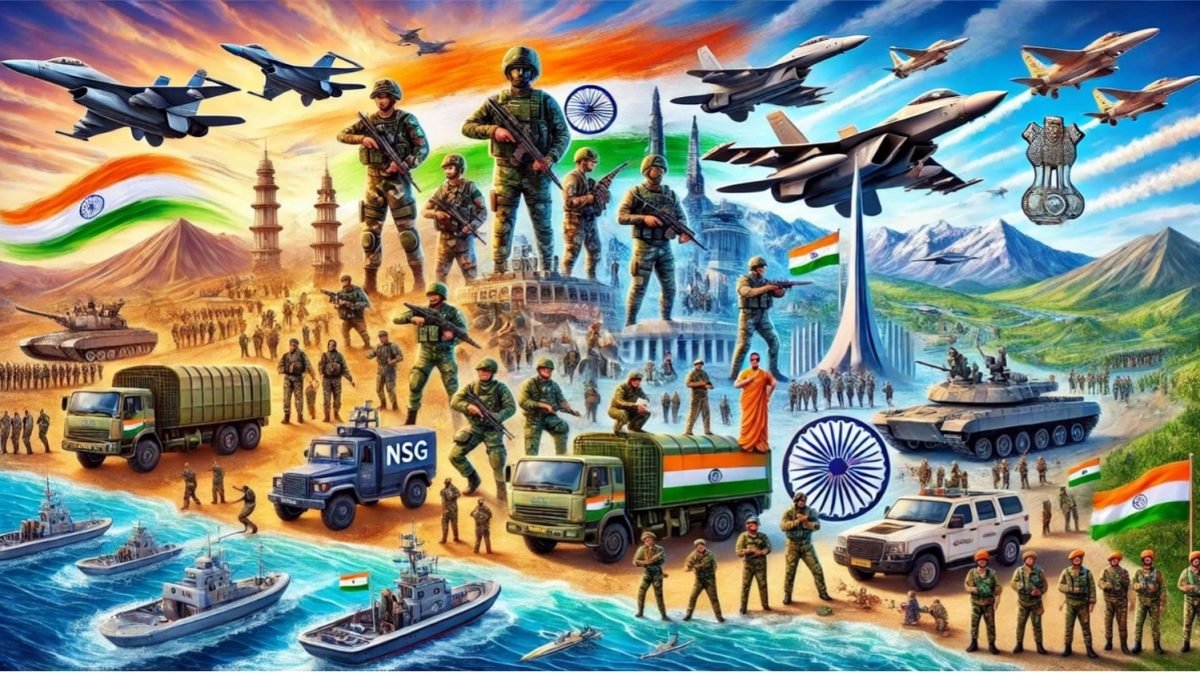
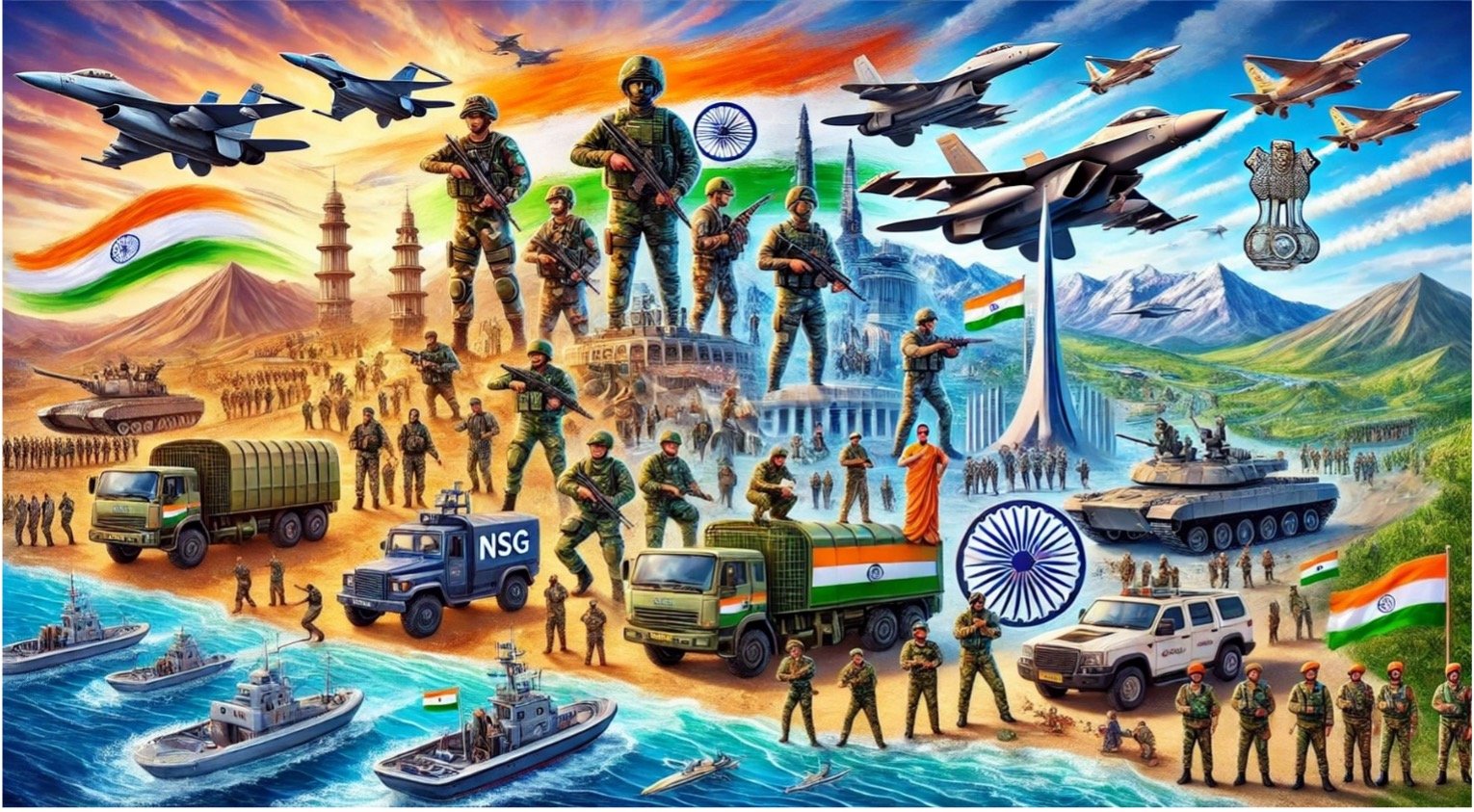
India’s security forces are a testament to resilience and strategic foresight. By addressing challenges and leveraging technological advancements, the nation can continue to safeguard its sovereignty and uphold peace in a rapidly changing world. The accompanying image portrays the seamless coordination of India’s defense and internal security forces, highlighting their strength and preparedness. It encapsulates border patrols, naval operations, air surveillance, and intelligence command center, symbolizing the comprehensive nature of India’s security architecture

